Journal /
What a Freight Forwarder's Website Needs to Win Work in Felixstowe
Most freight and haulage websites around the Port of Felixstowe look the same. Here is what buyers check before they request a quote, and how to build a site around it.
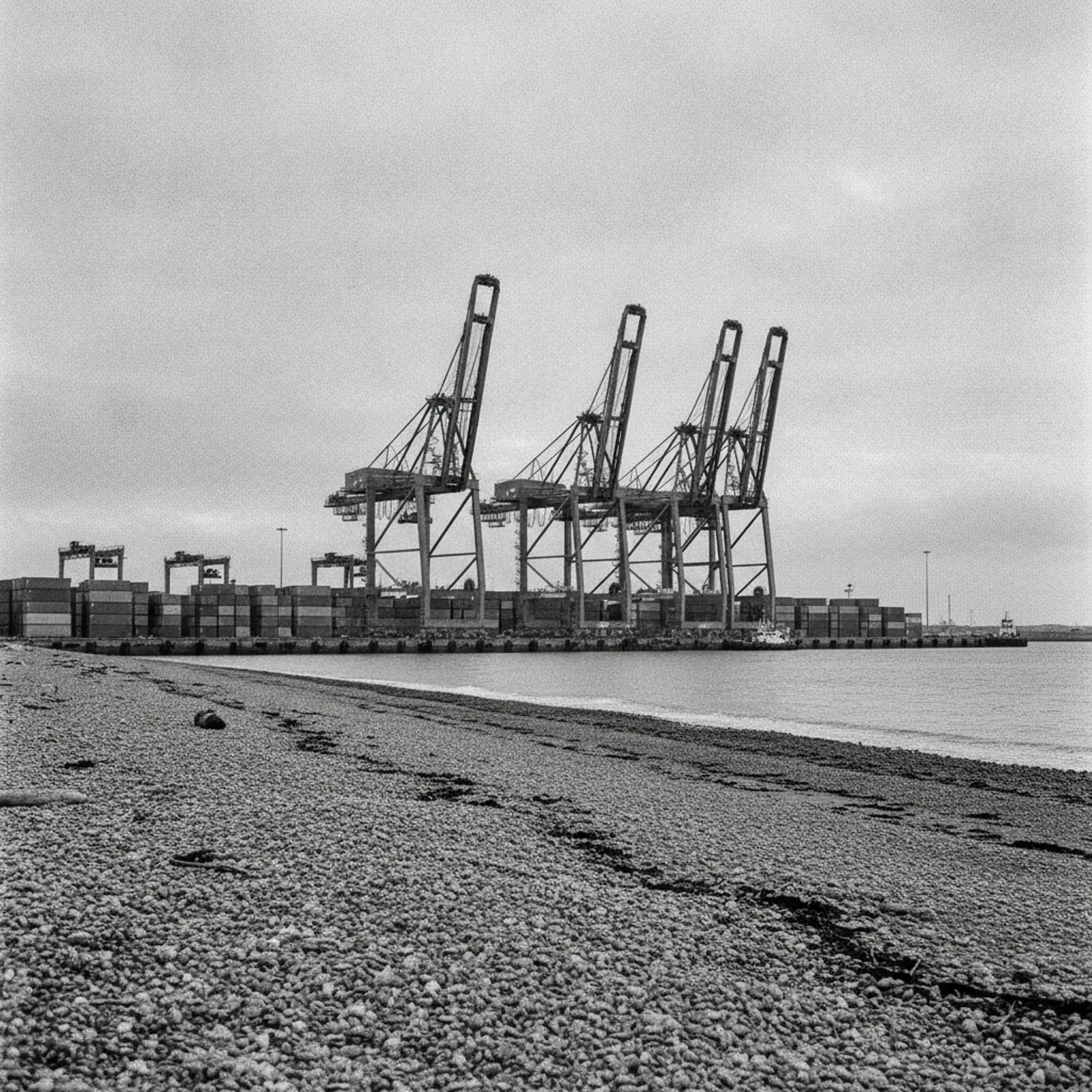
Drive along the A14 towards the Port of Felixstowe and you pass dozens of logistics businesses: freight forwarders, customs brokers, hauliers, container storage yards, warehousing operators. Look at their websites and most say roughly the same thing. A photo of a lorry or a ship. A line about "reliable, cost-effective solutions". A contact form.
That is a problem, because the people buying freight services are comparing several providers at once and looking for reasons to rule some out. If your website does not answer their questions, it gets ruled out quietly. This article sets out what logistics buyers actually check, and how to structure a site that answers them.
Who is looking at your site
Logistics websites tend to have three distinct audiences, and they want different things.
Shippers and importers. Often an operations or procurement person at a manufacturer or retailer. They want to know whether you handle their kind of cargo, on their routes, with the paperwork support they need. They are frequently comparing three to five providers.
Other logistics firms. Forwarders subcontract haulage, hauliers look for warehousing partners, and agents abroad look for UK partners. They want to know capacity, equipment and accreditations quickly.
Job applicants. HGV drivers, warehouse operatives, customs clerks and office staff. In a tight labour market around the port, the careers section might be the busiest part of the site.
A good site serves all three without making any of them dig.
Be specific about what you move
The single most useful change most freight websites can make is to replace vague statements with specific ones. "We handle all your freight needs" tells a buyer nothing. Compare:
- Full container loads (FCL) and less-than-container loads (LCL) through Felixstowe, Harwich and London Gateway.
- Groupage to and from the EU via the Harwich ro-ro routes.
- Temperature-controlled and ambient storage at a bonded warehouse near the port.
- Out-of-gauge and project cargo with escort arrangements.
Each of those lines could be its own page, with detail on the process, typical lead times, what the customer needs to provide and what you need to quote. Specific pages are also far more likely to appear in search, because buyers search in specific terms: "LCL shipping from China to UK", "bonded warehouse Felixstowe", "customs clearance agent Suffolk".
Explain customs plainly
Since the UK left the EU, customs has become one of the main reasons businesses change logistics provider. Many smaller importers and exporters still find the process confusing, and a provider who explains it clearly earns trust before the first conversation.
A customs page might cover:
- Which declarations you handle (imports, exports, transit, and so on).
- Whether you act as a direct or indirect representative, and what that means for the customer.
- What documents the customer needs to supply and when.
- How you handle goods that need checks, licences or special controls.
- What happens if something is held.
You do not need to write a legal guide. You need to show that you understand the process and will look after it.
Make the quote form work for you
The quote form on most logistics websites asks for a name, email and message. The result is an enquiry that cannot be priced without a phone call, which slows everyone down and loses impatient buyers.
A better form asks for what your team actually needs, using sensible fields:
- Service type (FCL, LCL, groupage, road, air, warehousing, customs only).
- Origin and destination.
- Cargo description, weight and dimensions or container size.
- Any hazardous, temperature or special handling requirements.
- Ready date.
- Optional file upload for packing lists or commercial invoices.
Keep fields optional where possible and use conditional logic so the form only shows relevant questions. A longer form is fine if each question clearly helps you give a faster, more accurate price. Buyers would rather type a few extra details than wait for a call back.
Show capability honestly
Trust signals matter in logistics, but only real ones. Good options include:
- Accreditations you genuinely hold, such as AEO status, BIFA membership, ISO standards or relevant handling certifications, with a line explaining what each means for the customer.
- Photos of your actual yard, warehouse, vehicles and team, not stock images of ships.
- Clear details of the sectors you serve and the kind of cargo you handle often.
- Your operating area, shown on a simple map.
Avoid inventing statistics or vague claims about being "the leading" anything. Experienced buyers ignore them.
Treat recruitment as a core function
Driver and warehouse shortages affect almost every logistics business in the Felixstowe and Ipswich area. Your website can do more of the recruiting work than it probably does now.
A useful careers section has a page per role type, explains shift patterns, licence and qualification requirements, and the site or depot location. If you can share pay ranges, do: applicants filter on them. Add a short, mobile-friendly application form, because many drivers will apply from a phone during a break. Each live vacancy can also carry JobPosting structured data, which helps it appear in Google's job search features.
Speed and mobile use
Logistics buyers often check websites on a phone between other tasks. Drivers almost always do. Pages need to be readable on a small screen and fast on a mobile connection. Heavy video headers, sliders and large uncompressed photos slow most freight websites down for no real benefit.
Local search still matters
Even if your customers are national or international, many searches still have local intent: "haulage company Ipswich", "container storage Felixstowe", "freight forwarder Suffolk". A properly completed Google Business Profile for each depot, consistent business details across directories, and a page for each location you operate from all help here.
A simple site structure
For a typical small-to-medium forwarder or haulier, a structure along these lines works well:
| Section | Pages |
|---|---|
| Services | One page per main service: FCL, LCL, groupage, road, air, customs, warehousing |
| Sectors | Retail, manufacturing, food and drink, or whichever you serve most |
| Locations | One page per depot or warehouse |
| Careers | One page per role type, plus live vacancies |
| About | History, team roles, accreditations |
| Quote | The structured quote form |
A checklist before you brief a web designer
| Question | Why it matters |
|---|---|
| Which services bring the most profitable work? | Those get the first and most detailed pages |
| What do customers ask before they book? | Those questions become page content and FAQ |
| What does your team need on a quote request? | That defines the quote form |
| Which roles are hardest to fill? | Those get their own recruitment pages |
| Which accreditations and memberships do you hold? | Only real ones go on the site |
Answering these five questions before a project starts saves weeks. Our web design process starts with exactly this conversation, and the Felixstowe page covers the quote form in more detail.
Where to start
If a full rebuild is not possible yet, start with three changes: rewrite the services section so each service has its own specific page, replace the contact form with a structured quote form, and build a proper careers page. Those three changes usually make the biggest difference to the number and quality of enquiries a logistics website produces.