Journal /
Capability Pages for Suffolk Manufacturers: What Technical Buyers Look For
Engineers and procurement teams judge suppliers on capability, not slogans. How Suffolk manufacturers can structure websites that answer technical buyers' questions.
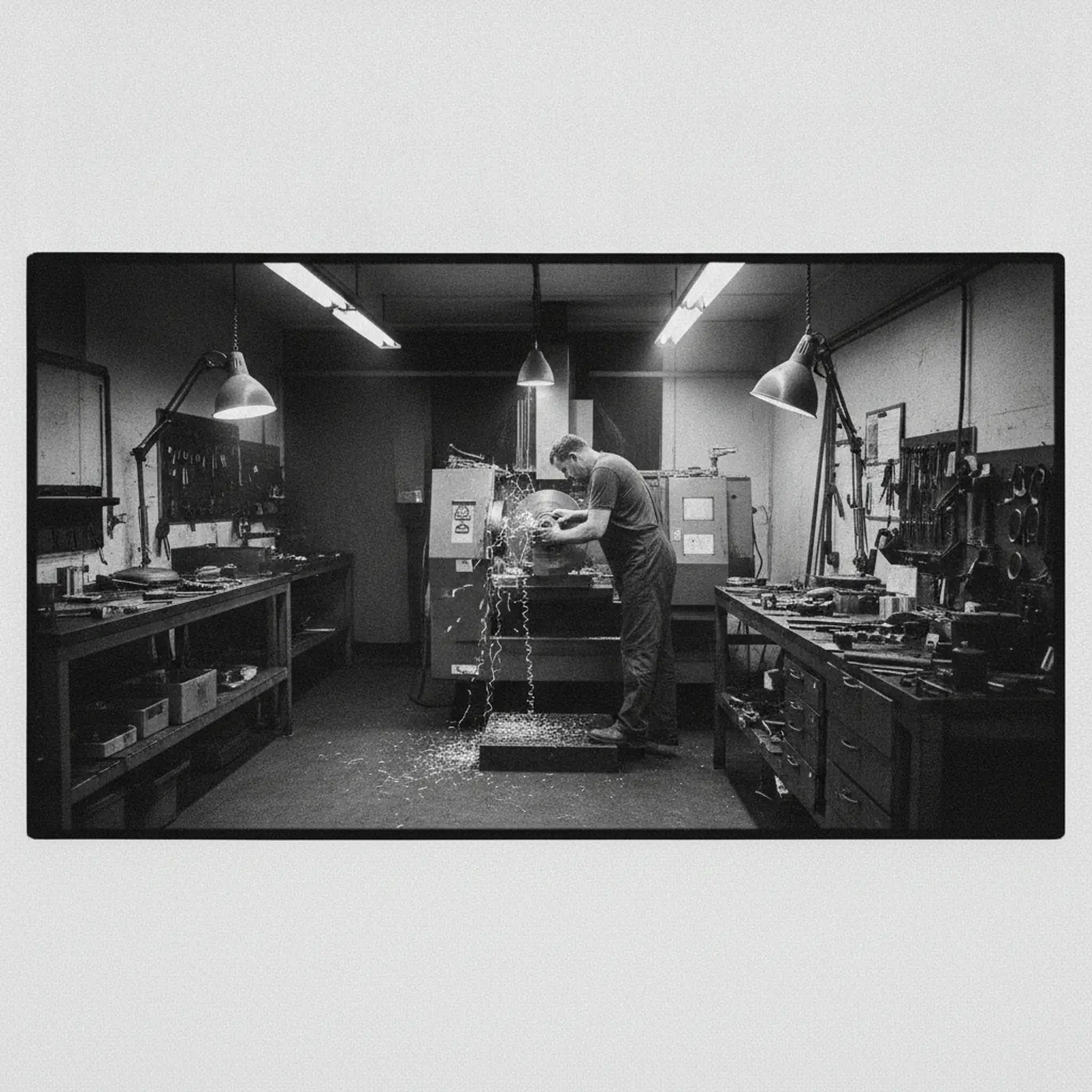
Suffolk has a manufacturing base that is easy to overlook. Along the A14 between Bury St Edmunds, Stowmarket and Ipswich, and in towns such as Haverhill, Sudbury and Lowestoft, there are precision engineers, fabricators, food processors, packaging makers, textile mills and specialist producers that supply customers all over the world. Many of them have websites that badly undersell what they can do.
The usual pattern is a home page with a slogan about quality, a list of machines, an "about us" page about the company's history, and a contact form. That might have been enough when most work came through long-standing relationships. Today, buyers increasingly shortlist suppliers online before they ever pick up the phone, and they judge you on whether the website answers their questions.
How technical buyers search
Engineers and procurement teams search in precise terms. They are not looking for "quality engineering solutions". They search for things like:
- "5-axis CNC machining aerospace aluminium UK"
- "stainless steel fabrication food grade Suffolk"
- "contract food manufacturer small batch East Anglia"
- "laser cutting 10mm mild steel Ipswich"
Each of those searches is a statement of a real requirement. If your website has a page that addresses it directly, you have a chance of being found and shortlisted. If your website mentions it once in a list on a generic services page, you probably will not be.
What a capability page should contain
A capability page describes one thing you do well, in enough detail that a technical buyer can decide whether it fits their requirement. A useful structure:
What the process is and what it is used for. Two or three sentences. Do not over-explain the basics to an expert audience, but be clear.
Materials. Which materials you routinely work with, and any you do not.
Size and tolerance ranges. Maximum part size, typical achievable tolerances, surface finishes. Only include figures you can consistently achieve.
Batch sizes. Prototype, small batch, production runs. Buyers often want to know whether you will take on small jobs or only volume work.
Equipment. Relevant machines, briefly. A machine list on its own is not very useful, but it supports the claims above.
Quality and inspection. How parts are checked, what documentation you supply, any quality standards you are certified to.
Typical applications. The kinds of parts or products you make with this process, described by sector without naming customers.
Photos. Real images of the process, parts and shop floor. They do more to build trust than any amount of copy.
A specific call to action. "Send us a drawing for a quote" with a form that accepts file uploads.
Industry pages
Alongside capability pages, sector pages help buyers who start from their own industry rather than a process. A Suffolk engineer might have pages for agriculture, food processing, defence, energy and marine, each explaining the kind of work done for that sector, the standards and constraints involved, and which capabilities are most relevant. Sector pages link through to capability pages, and capability pages link back.
This structure works for search engines too. It creates a clear set of specific pages, each with an obvious topic, linked together sensibly.
Proof without exaggeration
Manufacturing buyers are sceptical, and rightly so. They have read "world-class" and "industry-leading" on hundreds of websites. What persuades them is specific, checkable information:
- Certifications you hold, with their scope.
- The kinds of components you produce, with photos.
- Short descriptions of anonymised projects: the requirement, the challenge and how you solved it.
- How long you have operated from your current site, if relevant, and what investment you have made in equipment.
Leave out vague superlatives and made-up statistics. They make the honest information around them less believable.
Recruitment is part of the job
Manufacturers across Suffolk report difficulty hiring skilled machinists, welders, maintenance engineers and production staff. Many of those applicants look at the company website before applying. A good careers section explains what the work involves, the shift patterns, training and apprenticeships, where the site is and how to get there. Photos of the actual workplace help applicants picture themselves there.
The enquiry form
Technical enquiries need technical forms. Let buyers attach drawings in common formats such as PDF, STEP and DXF. Ask for quantity, material and required date. Make phone and email details easy to find for people who prefer to call. Make sure enquiries go to someone who can respond quickly, because response time is part of how buyers judge suppliers.
Speed and simplicity
Manufacturing sites do not need heavy animation or video backgrounds. They need fast pages, clear navigation and text a buyer can scan. A plain, well-organised site that loads quickly will often outperform an expensive-looking one that is slow and vague.
Getting the content written
The hardest part of a capability-led website is usually the writing, because the knowledge sits in the heads of engineers and production managers who are busy. A practical approach is a series of short interviews, one per capability, recorded and then written up into draft pages for the engineer to check. That keeps the content accurate without asking senior staff to write web copy.
A template for one capability page
Every capability page can follow the same outline. Fill it in for your most important process first:
| Section | What to write |
|---|---|
| Heading | The process in buyers' words, such as "CNC milling" or "Contract food packing" |
| Opening paragraph | What you do, for which industries, at what scale |
| Specification | Materials, sizes, tolerances, batch sizes, finishes, as far as you publish them |
| Equipment | The key machines and what they let you do, not just a list of model numbers |
| Quality | Inspection methods and accreditations you hold, with what they cover |
| Photographs | Your own shop floor, parts and people |
| Related | Links to related processes and the sectors you serve |
| Enquiry | A form that accepts drawings, quantities and deadlines |
Most of this already exists in quotes, spec sheets and the heads of your estimators. Getting it onto the page is the hard part, and it is where we spend most of our time with manufacturers. If your current site already ranks for some useful searches, a careful redesign keeps that while adding the new pages. The Stowmarket and Haverhill pages describe what we see from manufacturers in those towns.
Questions to ask whoever answers the phone
- What do buyers ask in the first call?
- Which enquiries do you turn away, and why?
- What do you wish customers knew before they called?
- Which jobs are you proudest of, and what made them hard?
Where to begin
If you are not ready to rebuild the whole site, pick the two or three capabilities that bring in the most profitable work and write proper pages for them. Add a quote form that accepts drawings. Then measure what enquiries come through. It is a small project, and it usually shows quickly whether a fuller rebuild is worth doing.
The takeaway
Pick your most profitable process and write one capability page for it this month, using the template above. Get the facts from whoever answers enquiries, take your own photographs on the shop floor, and add an enquiry form that accepts drawings. Then measure what that page brings in over the following months. Once you can see the difference one good page makes, the case for doing the rest of the site writes itself.